
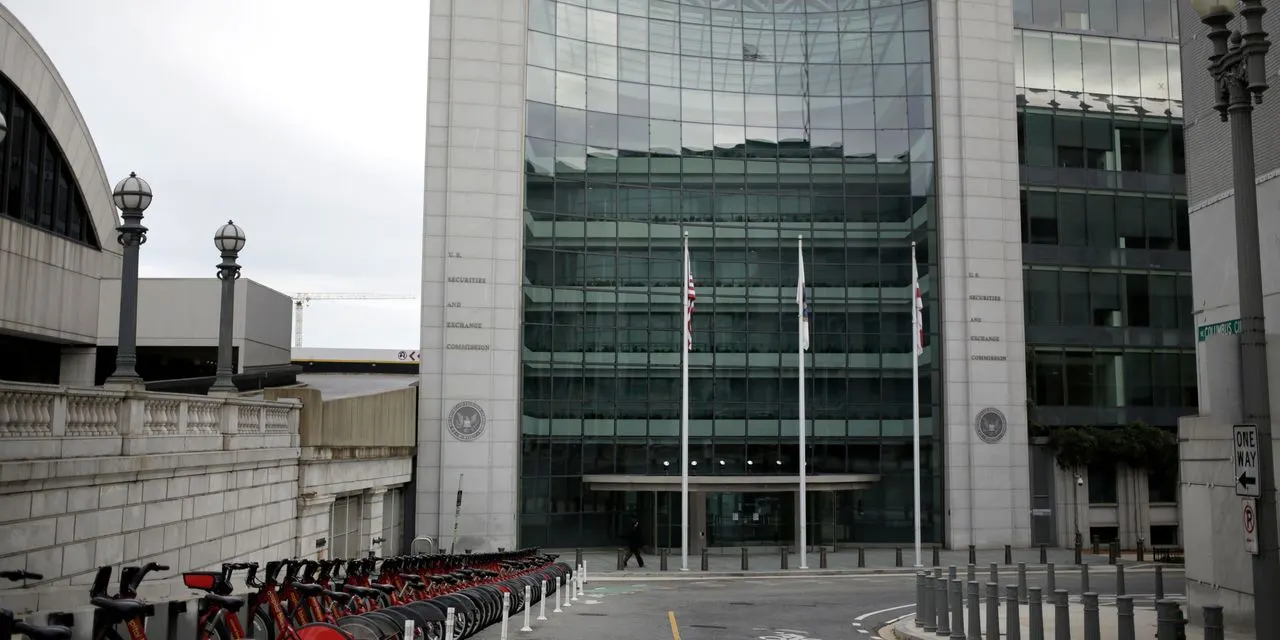
WASHINGTON—Complaints from the booming cryptocurrency industry that Washington has gone too far in cracking down on its unregulated products are being tested in a landmark lawsuit targeting Ripple Labs Inc. and its digital coin, XRP .
The lawsuit, which the Securities and Exchange Commission filed in the final days of the Trump administration, faces several hurdles in the coming months. A federal judge in Manhattan has been asked to decide, for example, whether Ripple can argue that regulators should have clearly announced the digital assets they oversee, rather than using enforcement action to bring the industry to heel. .
SEC says Ripple illegally raised nearly $1.4 billion by selling XRP in violation of investor protection rules, while its co-founder and chief executive, whom it also sued, reaped hundreds of millions of dollars in trading gains. The company claims that XRP is used to make international payments and is not an investment that should be supervised by the SEC. Some XRP sales took place before the SEC first declared in 2017 that many cryptocurrencies should follow written laws to protect investors from fraud and misleading hype.
Despite SEC guidelines in 2017, thousands of digital coins have been sold in recent years without regulatory oversight. The SEC has filed lawsuits against 56 token issuers, according to Cornerstone Research, but nearly all have settled with the SEC without going to court, where the regulator’s legal arguments could be tested by a judge or jury. An SEC win would bolster its case for imposing investor protections on most of the $2 trillion crypto market, while a loss would bolster the industry’s call for Congress to write clearer and more appropriate laws.
“Either way, we’re going to have an opinion that would be used by other players in the space to inform how they act and the decisions they make,” said Katherine Dowling, general counsel at Bitwise Asset Management, which manages several funds that hold cryptocurrencies.
Ripple CEO Brad Garlinghouse in 2018; he earned nearly $160 million from 2017 to 2020 selling XRP he received from Ripple.
Photo:
News by Wei Leng Tay/Bloomberg
Regulators have said a handful of digital assets, such as bitcoin, are mostly exempt from federal regulation. In contrast, XRP’s usefulness as a currency “never materialized”, says the SEC. Ripple touted the commercial use of XRP but did not disclose that it had paid a money transmitter to accept the coin. The money transmitter sold the digital coins, which gave the impression that XRP was more in demand, according to the SEC.
Ripple, whose defense attorneys include former SEC Chairwoman Mary Jo White, argued aggressively. Early in the case, he asked the SEC for documents that might have shown whether the regulator had allowed its staff members to trade XRP. A judge denied the request.
He also searched for emails within the SEC that may show regulators being uncertain or split on which tokens fall under their oversight. A federal magistrate judge in January said Ripple and its executives were entitled to certain SEC filings, but also allowed the agency to keep much of its thinking secret.
Ripple says its assertion that the SEC has been suspicious of the crypto assets it regulates supports its argument that it has not been fairly informed of the status of XRP. The case, which may not go to trial until next year, has been closely watched as many crypto firms insist that regulators update digital asset regulations, rather than using lawsuits to make apply the rules written in the 1930s.
The SEC asked a judge to block the fair opinion defense, saying the company had warnings about XRP’s status as a security. Ripple obtained a US legal opinion as early as 2012 that XRP could be considered an investment that would require SEC oversight, according to the complaint filed by the agency.
Part of Ripple’s argument hinges on a senior regulator’s statement in 2018 that ether, the world’s second most valuable cryptocurrency, is not a security. Ripple argues that market participants saw William Hinman’s speech as public notice that digital coins could avoid classification as a security.
The XRP cryptocurrency is more like ether than digital tokens that the SEC has previously targeted, according to Ripple. Both are decentralized, which means that they are managed by a network of users and not by a single company. Mr. Hinman has since left the agency, and SEC attorneys have said his views are not an official position of the agency. Mr. Hinman declined to comment.
The SEC was asked in January to share drafts and emails related to Mr. Hinman’s speech with Ripple. The SEC said it will ask the judge to reconsider his decision.
Ripple CEO Brad Garlinghouse earned nearly $160 million from 2017 to 2020 selling XRP he received from the company. Co-founder Christian Larsen, who was CEO until 2016, earned $450 million from XRP sales between 2015 and 2020, according to the SEC, which included his wife’s sales in the total.
SHARE YOUR THOUGHTS
To what extent should cryptocurrencies be regulated? Join the conversation below.
MM. Larsen and Garlinghouse asked the court to early dismiss the SEC’s lawsuit against them. The SEC lacks jurisdiction because their XRP was sold to foreign buyers, they say, adding that regulatory uncertainty surrounding digital assets means the executives’ actions on Ripple’s behalf were not reckless.
“We believe it is clear that XRP is not a security and the SEC has no jurisdiction over this matter,” said Martin Flumenbaum, attorney at Paul, Weiss, Rifkind, Wharton & Garrison LLP, which represents Mr. Larsen.
Ripple’s duel with the SEC has influenced its agenda in Washington, with the firm lobbying Congress to consider a bigger role for other federal agencies such as the Commodity Futures Trading Commission. The company spent nearly $1.1 million last year on lobbying, including supporting legislation that would allow crypto firms to opt for CFTC oversight. The SEC argued in court documents that Ripple’s lobbying efforts fueled any confusion about XRP that may have existed.
“Trying to fit digital assets, which are more akin to commodities than securities, into a securities regulatory framework simply doesn’t work,” said Stu Alderoty, general counsel at Ripple. “Not all roads lead to the SEC, because the SEC does not have a rational regulatory framework.”
Although the SEC has not announced any major actions against major crypto exchanges, the commission has threatened to sue companies offering crypto loans. The WSJ’s Dion Rabouin explains why this part of the crypto market has received such a strong reaction. Photo: Mark Lennihan/Associated Press
Write to Dave Michaels at [email protected]
Copyright ©2022 Dow Jones & Company, Inc. All rights reserved. 87990cbe856818d5eddac44c7b1cdeb8
.